Interfaces

Hierarchical Classification of Dimer Interfaces
                      Based on the Secondary Structures Present at Each Interface

OLIGAMI describes dimeric protein interfaces at three hierarchical levels. Each protein-chain side is first assigned to one of four interface classes (H, E, HE, or N) according to the secondary-structure composition of its interface-associated residues. Interface types (iTypes) describe recurrent arrangements of interface-associated secondary-structure elements within a single chain, whereas contact types (cTypes) describe alternative detailed contact configurations between the two interacting chains. Global protein fold, iType, and cType are not in one-to-one correspondence: a shared iType can occur across different folds and contain multiple cTypes. Browse the interface classes below to explore the hierarchy.

Dimer Interface classification

Interface class Number of iType Number of cType Number of chains
H 141128780
E 17633718
HE 211559922
N 24248

Datasets

  • Experimentally determined dimeric protein structures were obtained from OLIGAMI. The dataset was restricted to complexes containing two interacting protein chains; multimeric complexes were excluded, and multi-domain proteins were excluded using SCOPe and CATH domain annotations. Interfaces were required to contain at least 10 interface-associated residues, and complexes with intermolecular disulfide bonds at the interface were excluded.
  • The full dataset contains 11,334 dimers: 9,501 homodimers and 1,833 heterodimers, corresponding to 22,668 chain sides. The classification comprises 54 iTypes and 334 cTypes.
  • For sequence-redundancy-reduced analyses, sequences were clustered with MMseqs2 at 95% sequence identity, a minimum coverage of 0.8, and coverage mode 1. Redundancy was reduced at the dimer level, yielding the NR95 subset of 3,897 dimers (7,794 chain sides). The class counts above describe the full dataset, not the NR95 subset.

Definition of Interfaces and Interface-Associated Residues

  • Interface-associated residues were identified in two steps. First, solvent-accessible surface area (ASA) was calculated using DSSP for each chain in the intact complex and after removal of its interacting partner. Residues with lower ASA in the intact complex were retained as candidates.
  • Among these candidate residues, an inter-chain contact was defined as a residue pair across the two interacting chains with at least one pair of non-hydrogen atoms separated by less than 5 Å. Residues participating in at least one such contact were defined as interface-associated residues.
  • Secondary structures were assigned using DSSP. H–H, H–E, E–H, and E–E contacts describe inter-chain residue pairs according to the secondary-structure assignments of the residues on the two chain sides.

First Level: Interface Class

  • Each chain side is assigned to one of four interface classes (H, E, HE, or N) based on the secondary structures of its interface-associated residues within that chain. DSSP helical residues are counted as H, β-strand residues as E, and all remaining residues as non-regular (N).
  • H: at least two H residues and no more than one E residue. E: at least two E residues and no more than one H residue. HE: at least two H residues and at least two E residues. N: no more than one H residue and no more than one E residue.
  • N residues can also occur in H, E, and HE interfaces; their presence alone does not define the N class. N denotes non-regular secondary structure in experimentally determined structures and should not be interpreted as an intrinsically disordered interface.

Second Level: Interface Type (iType)

  • iTypes describe recurrent intra-chain geometric frameworks, independently of the detailed inter-chain contact configuration. Descriptors include the numbers of H, E, and N interface-associated residues; the number of interface-associated secondary-structure elements; their relative orientations and pairwise combinations within one chain; and intra-chain hydrogen-bonded β-sheet formation.
  • For strand pairs within a single chain, P and A denote parallel and antiparallel arrangements without hydrogen-bonded β-sheet formation. Ph and Ah denote parallel and antiparallel hydrogen-bonded β-strand pairs, respectively.
  • Hierarchical clustering uses standardized descriptors (zero mean and unit variance), Euclidean distance, and Ward's linkage method, without additional feature weighting. The threshold criterion was calibrated using the H class and applied to the other classes with adjustment for the number of retained descriptors.
  • Intermolecular β-sheet (IMB) formation means hydrogen-bonded β-strand pairing between the two interacting chains. In the E and HE classes, IMB-free interfaces were clustered as described above, whereas IMB-containing interfaces were classified separately according to the number of IMBs across the interface.
  • There are 14 H iTypes, 17 E iTypes (1–9 IMB-free; 10–17 IMB-containing), 21 HE iTypes (1–14 IMB-free; 15–21 IMB-containing), and two N iTypes, giving 54 iTypes in total.
(A)
Intra-chain geometric descriptors (PDB ID: 3m3o)
Chain sideInterface-associated residuesElementsH-HE-EH-EH-NE-N
HENHENRLPASPASPhAhIhPASLSLS
A0177065000000010400000009
B0177065000000010400000009


(B)
(C)
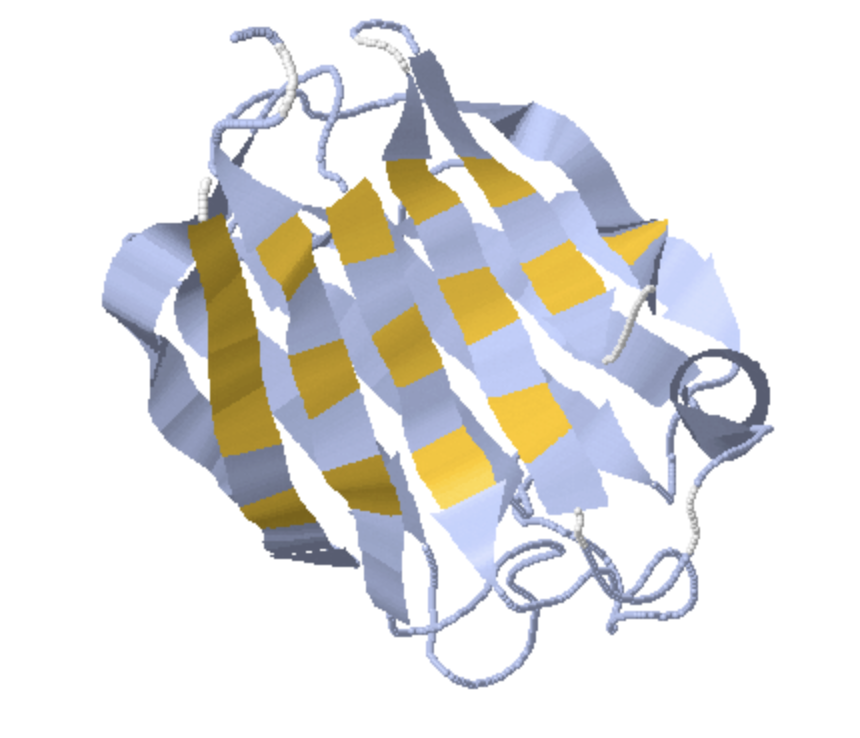
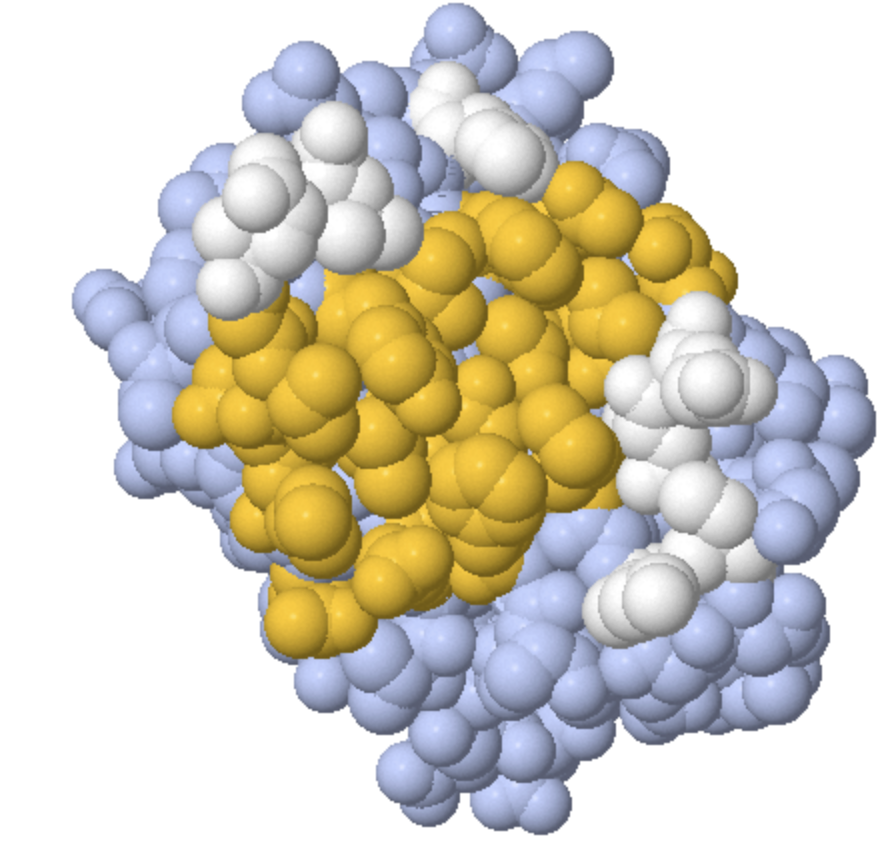
Figure 1. Example of iType descriptors (A) and interface-associated residues (B and C) for an E-class interface (PDB ID: 3m3o). Interface-associated residues in β-strands and non-regular regions are colored yellow and white, respectively. The descriptors describe arrangements within a single chain. Ah counts antiparallel hydrogen-bonded β-strand pairs within that chain, not contacts between the two chains.

Third Level: Contact Type (cType)

  • Within each iType, cTypes distinguish alternative detailed inter-chain contact configurations. Descriptors include the numbers of contacting residue pairs between secondary-structure categories (including contacts involving N regions), and the numbers and relative orientations of contacts between secondary-structure elements on the interacting chains.
  • Element-pair orientations are classified as parallel, antiparallel, or orientation-unassigned. An orientation is assigned only when at least two residues from each interacting secondary-structure element participate in the contact.
  • Hierarchical clustering uses Euclidean distance and Ward's linkage method. Features with no variation within an iType are excluded; retained features are z-score normalized within that iType without additional weighting. The threshold is calibrated using HE iType 8 and adjusted for the number of variable descriptors.
  • cTypes are assigned separately to each protein-chain side. Labels are defined within each interface-class/iType combination and are not globally unique. The two sides of a dimer can therefore have different class, iType, and cType assignments. The full classification contains 334 cTypes.
(A)
Inter-chain contact descriptors (PDB ID: 3m3o)
Chain sideResidue pairsH-HE-EH-EH-NE-N
H-HE-EN-NH-EH-NN-EE-HN-HE-NPASPASIPhIAhPASLSLS
A / B0343001300130004420000000214


(B)
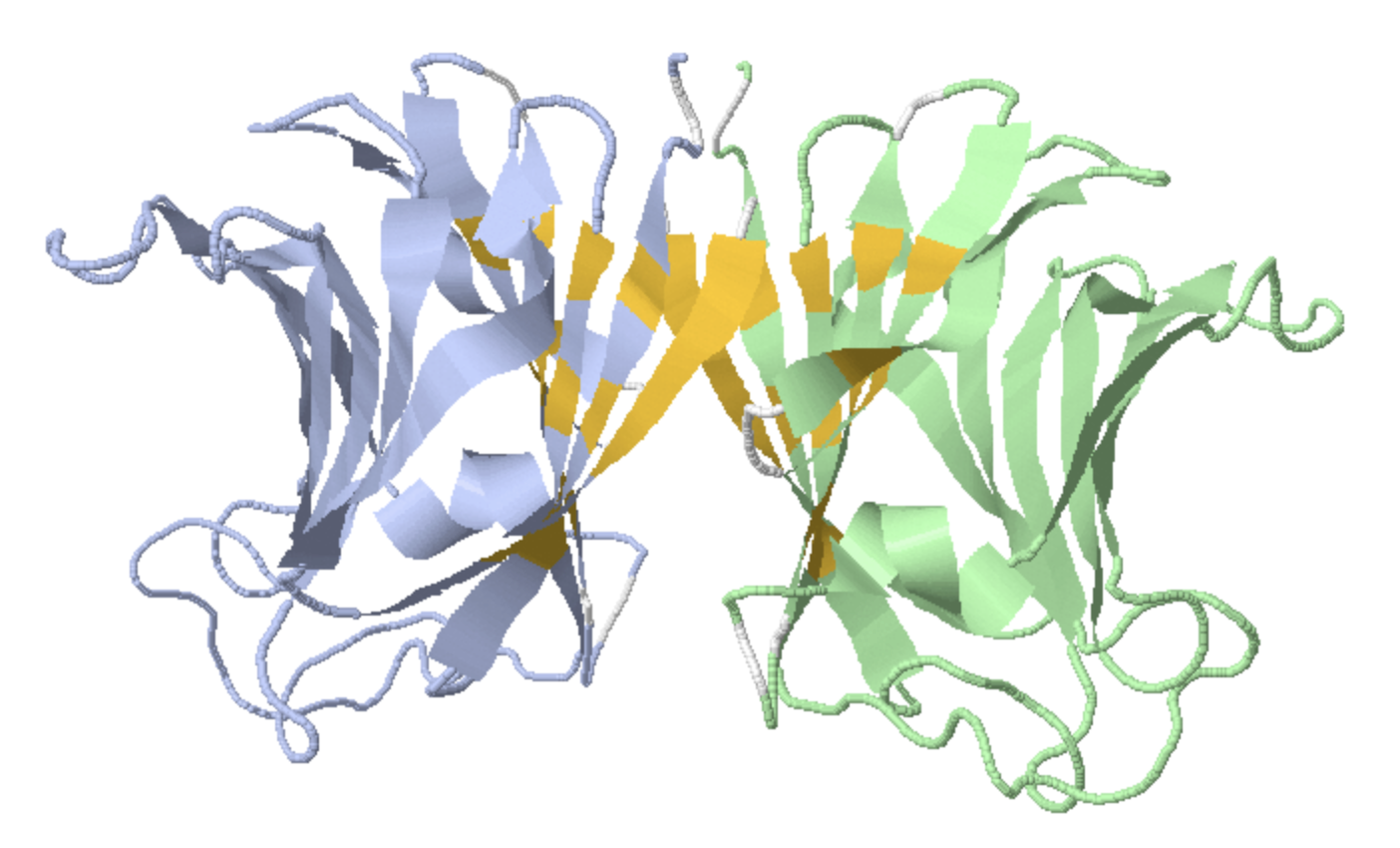
Figure 2. Example of cType descriptors (A) and interface-associated residues (B) for an E-class interface (PDB ID: 3m3o). These descriptors describe contacts between the two interacting chains. P and A count parallel and antiparallel contacts between secondary-structure elements on opposite chains; contacts without an assigned orientation form a separate category.
PDL